
the Synapses.
The nervous system. A cell fires a typed signal across a synapse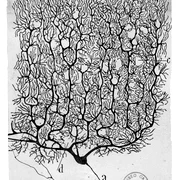 The junction where one nerve cell passes a signal to the next, a gap the signal crosses to reach exactly the cell meant to receive it.; the durable outcome consolidates into the Nucleus.
when agents multiply
−70%
Relative to a single agent, multi-agent performance ranged from +80.8% on decomposable financial reasoning to −70% on sequential planning; mismatched coordination degraded performance.
Put agents on the wrong kind of work and they do worse than one agent alone.
One agent can do a task. The moment you need several to work together, they have no shared language. Each calls its own tools, keeps its own context, and hands off by copy-paste or not at all. Small mistakes compound as they pass work around.
where today falls short
Agents call tools. They do not talk to each other with a contract.
A tool call is a request into the void. You fire it and hope. There is no typed message between agents, no thread that stays open until the work is closed, no record that the ask was answered. So coordination lives in a human’s head, or it does not happen. That layer has to live between the cells themselves, not in the humans watching them.
The wiring
A colony in constant contact.
Cells don't work alone. They signal, hand off, and stay in contact. Here that contact is typed and on the record, from a question that waits for its answer to a review that waits for its response. The diagram below shows a signal actually firing.

the answer
Cells fire typed signals across synapses, and every one has a close.
- question
- review
- decision
- correction
- notice
A cell fires a signal with a shape. It travels a thread to the cell that can answer, and the outcome consolidates into the Nucleus as a permanent record. A question is not done until it has an answer, and a review is not done until it has a response, so nothing is left dangling and no coordination lives only in someone’s memory.
more than a message
What a synapse has that a chat message doesn't.
A signal is not a line of text tossed over the wall. It is typed, it rides a pathway, it has to close, and its outcome is kept.
Every signal is typed.
!Today A lone agent sends freeform text, and the receiver has to guess what it is being asked to do.
the cell Each signal declares its shape first, a question, a review, a decision, a correction, so the receiver knows exactly what response closes it.
A thread is a pathway that stays open.
!Today A lone agent's messages scatter; there is no one place a whole conversation lives.
the cell Related signals ride one thread until the work is closed, so the entire exchange is one traceable pathway, not loose replies.
Every signal has a close.
!Today A lone agent fires and forgets, and no one can tell if the ask was ever answered.
the cell A question is not done until it has an answer, and a review is not done until it has a response. The thread only closes when the work actually resolves, so nothing sits half-open.
The outcome consolidates into the Nucleus.
!Today A lone agent's chat scrolls away; whatever got decided lives only in a transcript nobody reopens.
the cell When a signal resolves, its outcome is written into the Nucleus as a typed, permanent record, so the decision outlives the exchange and the next cell inherits it instead of asking again.
from our own systems
The nervous system, firing today
These are real signals between real cells, each typed and each anchored to the work it moves. Every firing is captured in the Nucleus, so a cold cellA worker that starts with no memory of past sessions and rebuilds its context from the shared record before it acts. can read exactly what was asked, answered, and decided.
KeyA green value is real, from our own database, as of Oct 8, 2026; in the diagrams, green marks a committed write.
still firing
7,754A real count from our own database, shown as proof rather than a claim. It is a dated snapshot, captured Oct 8, 2026.
typed signals fired
- Signals already on record when we counted on Sep 20, 2026.
- Signals recorded between Sep 20, 2026 and the date on this card.
a real count from our own database, as of Oct 8, 2026
the pathways
3,412
threads
where loops close
794
decisions reached
zoom in
Down to a single firing
One firing is one typed message from one cell to another, on one thread. The receiving cell moves past it only once the exchange is resolved. That is a synapseThe junction where one nerve cell passes a signal to the next, a gap the signal crosses to reach exactly the cell meant to receive it., a signal with a shape, a path and an end.
- Organismthe whole company

×1 - Systemone of the nine parts

×2.5 - Agentic Cellone worker, one role
×7 - Recordone thing a cell commits, like one firing, a typed message to another cell
×12
Curious how a layer like this would fit your own records?