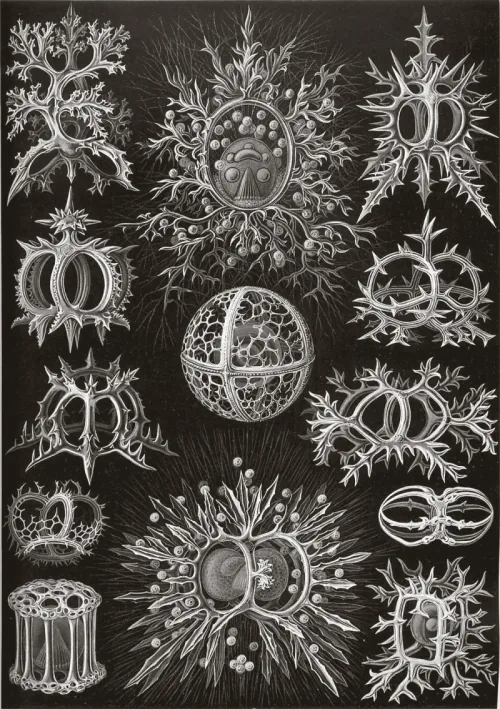
the Skeleton.
The structure that organizes and holds up the work, from epic to milestone to task.
work sprawls
37%
The top reason strategic initiatives failed in PMI’s survey was a lack of defined objectives and milestones, cited at 37%.
Work fails when nobody can see its shape.
A prompt can start a task. It cannot tell you what that task is part of, what has to finish before it, or when the whole effort is actually done. So goals drift, scope creeps, and half-built pieces pile up with no roadmap holding them together.
where today falls short
A to-do list is not a plan.
Most teams point an agent at a task and hope. Nothing above the task says which goal it serves, which chunk it belongs to, or what has to land before it can start. Without that structure the work has no roadmap, and no way to prove it is finished. That structure has to exist above the task, before the work starts.
The structure
A body of work, given a spine.
A radiolarian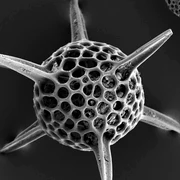 A single-celled sea creature that builds an intricate mineral skeleton around itself. is mostly water, yet it holds an exact shape by building a silica lattice
 An open framework of silica, the glassy mineral in sand, built strut by strut like microscopic scaffolding. around itself, strut by strut. A body of work needs the same frame. Here every goal is an explicit skeleton of epics, milestones, and tasks, each one placed and load-bearing, so the work keeps its shape instead of drifting apart. The diagram below assembles one.
the answer
Every unit of work has a place, as an epic, a milestone, or a task.
The organism organizes its work into a hierarchy. An epic frames a goal. Milestones bound the chunks that get there. Tasks are the executable steps a cell actually runs, each self-contained and each moving through one lifecycle from proposed to done. The structure is what holds the work up and gives the organism its roadmap.
more than a to-do list
What a structured body of work has that a task queue does not.
A queue is a flat list of things to do. A skeleton adds the goals, the chunks, the steps, and the order they have to happen in.
Work breaks down into a hierarchy.
!Today A lone agent gets a vague prompt and improvises the scope. Nothing says what the task is part of.
the organism Every task sits under a milestone, and every milestone under an epic. The goal frames the chunks and the chunks frame the steps, so the whole effort has a shape you can see and a roadmap you can follow.
see the NucleusEvery task carries its own briefing.
!Today A lone agent depends on whoever set it up. Lose that person’s context and the work stalls.
the organism A task is self-contained, with an objective, its acceptance criteria, and its scope. Any cell can pick it up cold, with no prior conversation, and know exactly what done looks like.
see the Agentic CellsThe lifecycle is enforced, not guessed.
!Today A lone agent calls something done and moves on. Status is a guess, and the order of the work lives in someone’s head.
the organism Every task is proposed, then queued, then active, then done. A task cannot start until the work it depends on has finished, and done means verified, on the record.
see the Immune Systemfrom our own systems
The work-hierarchy holding up this organism today
Every number below comes from the system’s own database. It counts the epics that frame the goals, the milestones that bound them, and the tasks the cells run.
KeyA green value is real, from our own database, as of Oct 8, 2026; in the diagrams, green marks a committed write.
steps run
10,356A real count from our own database, shown as proof rather than a claim. It is a dated snapshot, captured Oct 8, 2026.
tasks
- Tasks already on record when we counted on Sep 20, 2026.
- Tasks recorded between Sep 20, 2026 and the date on this card.
a real count from our own database, as of Oct 8, 2026
goals framed
189
epics
chunks bounded
1,010
milestones
zoom in
Down to a single task
A task is the smallest piece of work. It holds what to do, how to tell when it is done, where it may work, and the milestone and epic it belongs to. That is enough for any cell to pick it up cold and know exactly what done looks like.
- Organismthe whole company
×1 - Systemone of the nine parts
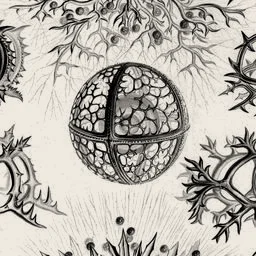
×2.5 - Agentic Cellone worker, one role
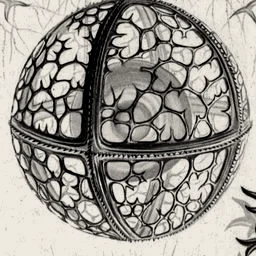
×5 - Recordone thing a cell commits, like a task another cell can pick up
×12
Want to watch the organism actually run, not just read about it?
Census reference Oct 8, 2026.