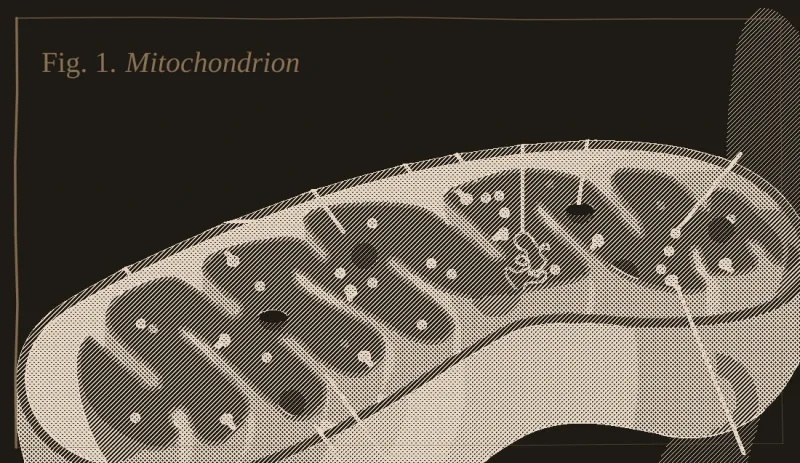
the Metabolism.
Energy. Tokens are calories. It burns them to work, meters every one, and prices the whole ledger.
the bill nobody can read
79%
overran their AI budget
79% of enterprises overran their AI budget in the last 12 months, and only 15% can calculate their AI ROI without significant bottlenecks.
The AI bill keeps climbing, and no one can say what it bought.
Every model call costs money, but the cost arrives as one lump vendor invoice at the end of the month. There is no line-item, no way to tie a dollar to the work that spent it, and no early warning when a run goes hot. So budgets overrun and the return stays a guess.
95% of organizations are getting zero return on their generative AI investment.
where today falls short
A vendor invoice is a total. It is not a meter.
Renting AI gives you a number at the end of the month, not visibility during it. You cannot see which model, which task, or which run spent the money, so you cannot catch a runaway before it lands or calculate the return after. And when a part of the system quietly drifts out of health, nothing is watching to notice. A bill is not an instrument. The measuring has to happen while the work runs.
The cell's power plant
Burn fuel, count every unit.
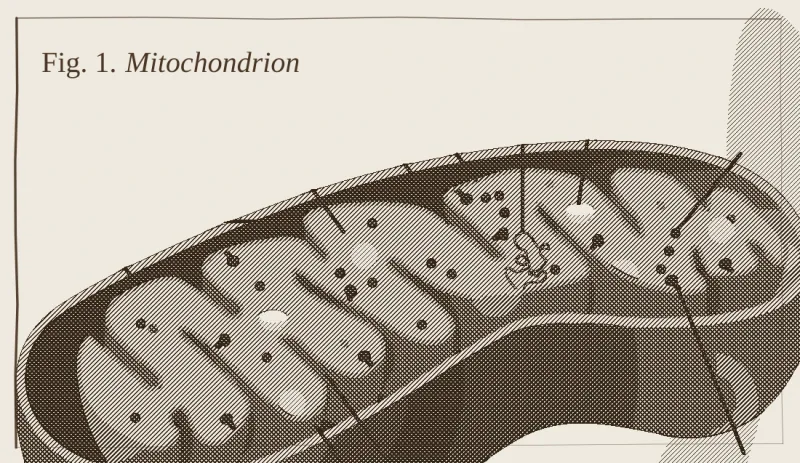
A mitochondrion The cell's power plant. It burns fuel into ATP, the energy every other process spends. burns fuel into ATP
 ATP (adenosine triphosphate) is the molecule a cell spends as energy, made by burning fuel., the single unit of energy every other process spends, and nothing in the cell runs without drawing on it. The Metabolism runs the organism the same way. Every token is a calorie, spent to do work, counted as it burns, and priced per model, so the cost of the work is never a mystery on a monthly invoice. The diagram below meters a single burn.
the answer
Tokens are calories. It meters every one and prices the whole ledger.
The organism treats compute as energy. Every unit of work burns tokens, and each token is counted the moment it is spent and priced at its own model rate into a running ledger. The bill is not a surprise at month end; it is a live meter you can read, trace to the exact work, and cap. And the same telemetry that watches the burn watches the organism, so a part that drifts out of health is healed before it becomes an outage.
more than a bill
What a metered organism has that a monthly invoice does not.
A lump-sum invoice tells you what you spent. A metabolism tells you what you spent it on, watches it as it happens, and keeps itself healthy while it runs.
Every model is metered at its own rate.
!Today A lone vendor bill is one opaque total. You cannot see which model or which task spent what.
the cell Each call is counted at the token level and priced at that engine rate, then written as a ledger line tied to the work. Swap the model underneath and the meter tracks the new rate.
Everything it does is on the telemetry stream.
!Today A lone agent runs invisibly. You learn about a problem from the bill or from an outage, after the fact.
the cell Every command it runs streams into a partitionedSplit into dated slices, so data that grows forever stays fast to write and cheap to retire. store you can query, tied to the session that ran it. The runtime is observable, not a black box.
It notices when a part drifts, and heals it.
!Today Config drift and dead services sit unnoticed until something visibly breaks.
the cell Health checks watch every part. When a host drifts from its canonical state, it is detected and reconciled unattended, with no human in the loop.
from our own systems
The metabolism, running today
These numbers come from the organism metering its own energy and watching its own health. It keeps a priced usage ledger per model and per token, a partitionedSplit into dated slices, so data that grows forever stays fast to write and cheap to retire. telemetry stream of every command it runs, and health checks that catch drift and reconcile it unattended.
KeyA green value is real, from our own database, as of Oct 8, 2026; in the diagrams, green marks a committed write.
telemetry, partitioned
159,120A real count from our own database, shown as proof rather than a claim. It is a dated snapshot, captured Oct 8, 2026.
command-telemetry events, partitioned
a real count from our own database, as of Oct 8, 2026
watching itself
17,720
health checks run
energy, costed
priced
usage ledger, per model and per token
zoom in
Down to a single burn
One call, a known number of tokens, priced at this model rate, written as one line in the ledger and tied to the task that spent it. That is the smallest unit of the metabolism, and every one of them is on the record.
- partitionedSplit into dated slices, so data that grows forever stays fast to write and cheap to retire. telemetrythe organism watches itself, streaming every command it runs into a store you can query
- the Meter, a priced ledgereach call’s tokens priced at its model’s rate, one ledger line per call, like this burn
- drift, self-reconcilea part drifting out of health is caught and healed unattended, and the watching starts again
Curious how a layer like this would fit your own records?