the Nucleus.
The memory. One permanent, typed record every cell writes to, and reads from.
what breaks across turns
35%
Leading AI agents achieve around 58% single-turn success on enterprise CRM tasks, dropping to approximately 35% in multi-turn settings.
AI can do a task. It cannot remember doing it.
A model handles one step well. The moment the work spans several turns, a handoff, or a new session, it starts over from nothing. It forgets what was decided, repeats what was already tried, and contradicts what another agent just did. The intelligence is real, but it has no memory a company can build on.
where today falls short
A bigger context window is not a memory. A scratchpad is not a record.
Teams bolt a vector store onto a single agent and call it memory. But it is private to that agent, unstructured, and gone when the session is. There is no one place the whole organism writes to and reads from, no typed record of what was decided and why, nothing the next cell can trust. So the knowledge never compounds. Memory one agent keeps to itself is not memory. It has to belong to the organism.
The record
The cell's permanent core.
In every cell, the nucleus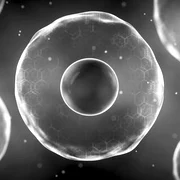 The cell's core, which holds the genetic material and directs what the cell does. holds the permanent record, structured and carried forward intact through each division. The organism's Nucleus keeps its outcomes the same way, with every decision and lesson sealed, recalled by meaning, and never overwritten. The diagram below shows a memory consolidating.
the answer
One permanent, typed record every cell writes to, and reads from.
Every outcome a cell produces, a decision, a lesson, a piece of knowledge, lands in the Nucleus as a typed, permanent record. The next cell to work rehydratesRebuild the context a cell needs from the permanent record, so a fresh session starts informed by what was decided and learned, not from a blank slate. from it, reading what was decided, what was learned, and what not to redo. The record is shared, governed, and durable, so the organism gets smarter the longer it runs instead of starting over.
more than a chat log
What the Nucleus has that a context window doesn't.
A context window holds a conversation for a while. The Nucleus keeps the outcome, typed, forever, and lets every cell build on it.
The memory has a shape.
!Today A lone agent keeps loose notes, if it keeps anything, and nobody else can read them.
the cell Every outcome is a typed record, a decision, a lesson, a piece of knowledge, each with its own required fields. Memory you can query, not a transcript you have to reread.
A cold cell rehydrates from it.
!Today A lone agent starts every session from zero and asks you to re-explain what it already did.
the cell A new cell searches by meaning, not keyword, and pulls exactly the records it needs to pick up where the last one left off. It starts its session already informed.
And it compounds.
!Today A lone agent makes the same mistake twice because nothing it learns outlives it.
the cell Each cell writes what it learned back to the record, so the next one inherits it. The organism gets smarter the longer it runs, instead of resetting.
from our own systems
The memory it has built so far
These are real, typed records in the Nucleus today, each written by a cell and readable by the next. Not chat logs, structured memory, where every decision carries its rationale, every lesson its cause, and every entry a permanent place a cold cellA worker that starts with no memory of past sessions and rebuilds its context from the shared record before it acts. can trust.
KeyA green value is real, from our own database, as of Oct 8, 2026; in the diagrams, green marks a committed write.
still being written
794A real count from our own database, shown as proof rather than a claim. It is a dated snapshot, captured Oct 8, 2026.
decisions, each with its rationale
- Decisions already on record when we counted on Sep 20, 2026.
- Decisions recorded between Sep 20, 2026 and the date on this card.
a real count from our own database, as of Oct 8, 2026
what went wrong, kept
734
lessons, each with its cause
what the organism knows
1,416
knowledge entries
zoom in
Down to a single record
One decision, with the alternatives it weighed and the reasons it was made, written once and readable forever. The Nucleus is built from records like this one, and together they hold what the organism knows.
- Organismthe whole company
×1 - Systemone of the nine parts
×2.5 - Agentic Cellone worker, one role
×8 - Recordone thing a cell commits, like a decision
×16
Curious how a layer like this would fit your own records?