Agentic Cells.
The workforce. Each cell is a role the organism owns, run by any AI model you can swap in; change the model underneath and the job stays.
renting the worker
40%
will be canceled
Over 40% of agentic AI projects will be canceled by the end of 2027.
why they get canceled
- Escalating costs
- Unclear business value
- Inadequate risk controls
Companies are buying AI. They are renting one vendor’s worker.
A model can draft an email. It cannot run a department, coordinate with the rest of the business, or remember what it did yesterday. So teams bolt on an "AI agent," and almost always it is a single vendor’s agent, with one model, one account, and one point of failure. When that vendor changes its model, its price, or its terms, the work is stranded.
where today falls short
Most "AI agents" are one model’s agent. Lock-in by design.
The market is buying its intelligence off the shelf and wiring each tool to a single provider. Nothing sits above the models to own them, swap them, or hold them to a roleEverything a cell is responsible for. Its identity, rules, and skills are versioned in its genome, and the role stays the same while the AI running it swaps out.. So the capability is real, but it is rented, siloed, and forgotten between sessions. The part worth owning was never the model. It is the thing above it.
76% of enterprise AI use cases are now purchased rather than built internally, up from 53% of AI solutions in 2024.
37% of enterprise CIOs surveyed were using five or more AI models, up from 29% the year before.
The unit
One cell, endlessly varied.
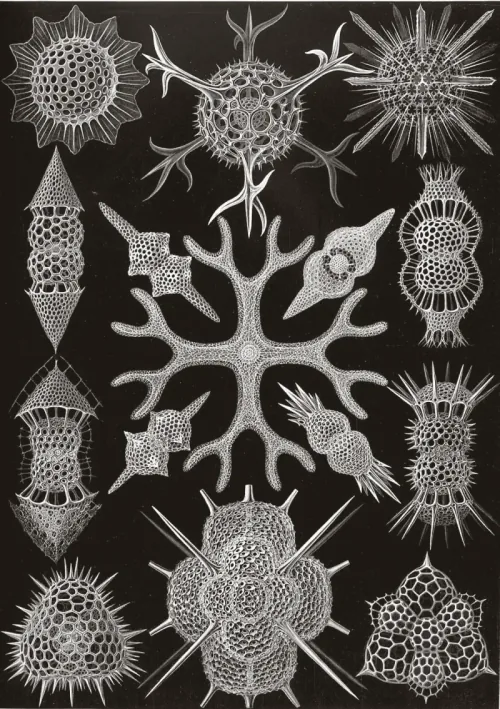
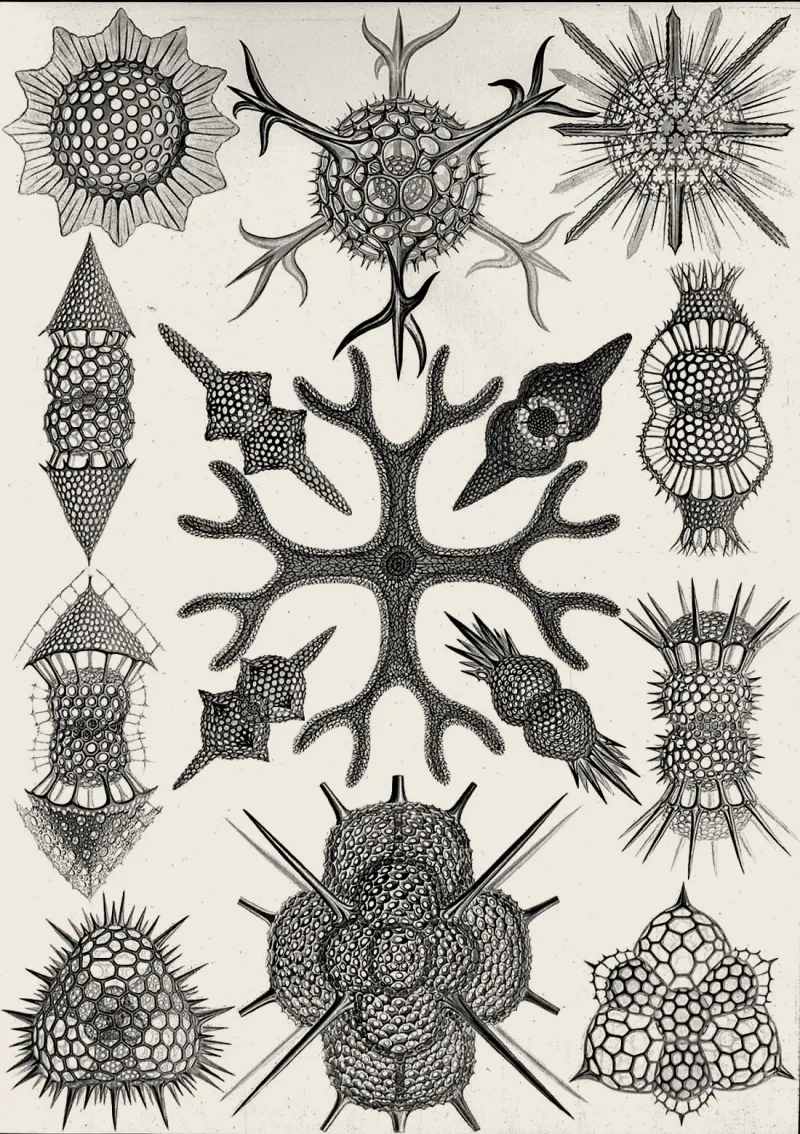
Each Agentic Cell is one roleEverything a cell is responsible for. Its identity, rules, and skills are versioned in its genome, and the role stays the same while the AI running it swaps out., run by any AI you can swap in, with its identity, rules, and skills self-contained and composable. Drawn the way a naturalist drew radiolaria A single-celled sea creature that builds an intricate mineral skeleton around itself., a thousand variations on a single living unit. The diagram below shows how they coordinate.
the answer
An Agentic Cell is a role the organism owns, run by any AI you can swap in.
The organism composes its workforce from a marketplaceA catalog of versioned, swappable parts a cell is composed from. The parts are identities, roles, rules, skills, and hooks. of versioned parts, from an identity and a roleEverything a cell is responsible for. Its identity, rules, and skills are versioned in its genome, and the role stays the same while the AI running it swaps out. to the rules, skills, and hooksA rule that fires automatically at a set moment, such as before a write or at the end of a session, so it never depends on someone remembering to run it. a cell runs on. Swap the model running underneath a cell, from one provider to another, and the cell keeps its job. You own the workforce. You are not renting one vendor’s.
what this teachesA cell is a role, not a model. The engine running underneath can change; the job does not.
Any model can run it. The role is unchanged.
try itClick any cell in the fleet to show it in the panel above.
the cell’s toolsreads the shared record · commits code · calls governed tools · signals other cells
more than an agent
What an Agentic Cell has that a model with a prompt doesn't.
A cell is not a chatbot with a to-do list. It lives in an organism, and the organism is what a lone agent will never have.
It remembers, and the memory compounds.
!Today A lone agent forgets the moment the session ends. Every conversation starts from zero.
the cell A cell writes every outcome to one permanent, shared record. The next cell to work inherits everything the last one learned, so the organism gets smarter the longer it runs.
see the NucleusIt talks with a real protocol.
!Today A lone agent calls a tool and hopes. It cannot coordinate with the rest of the business.
the cell Cells fire typed signals to each other, each with a shape and a close, so a question gets an answer, a review gets a response, and a decision gets made.
see the SynapsesEvery action lands on the record.
!Today A lone agent can invent an action, and no one can prove what it actually did.
the cell Every cell acts through one governed channel. A bad write is refused in transit; a good one commits and is logged forever. The organism cannot invent its own state.
see the Immune Systemfrom our own systems
The workforce running this organism today
Every cell below is real and active. Each is a roleEverything a cell is responsible for. Its identity, rules, and skills are versioned in its genome, and the role stays the same while the AI running it swaps out. run by any AI backend you can swap in, minted from the persona marketplaceA catalog of versioned, swappable parts a cell is composed from. The parts are identities, roles, rules, skills, and hooks., orchestrated by a human.
KeyA green value is real, from our own database, as of Oct 8, 2026; in the diagrams, green marks a committed write.
Roster counts verified Oct 8, 2026.
zoom in
Down to a single cell
Paprika plans the work and hands it out. Sage keeps the database. Each is one worker in the organism. Its identity, rules and skills are written down apart from the AI model it runs on, so the model can change and the worker stays the same.
- Organismthe whole company
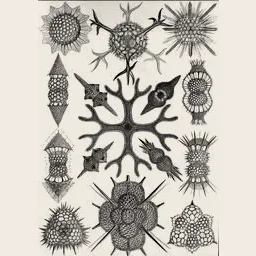
×1 - Systemone of the nine parts
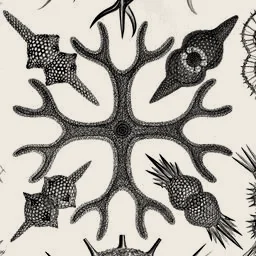
×2.2 - Agentic Cellone worker, one role, like Paprika or Sage
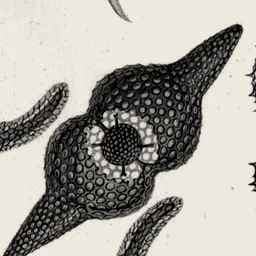
×6
Want to watch the organism actually run, not just read about it?
Census reference Oct 8, 2026.